
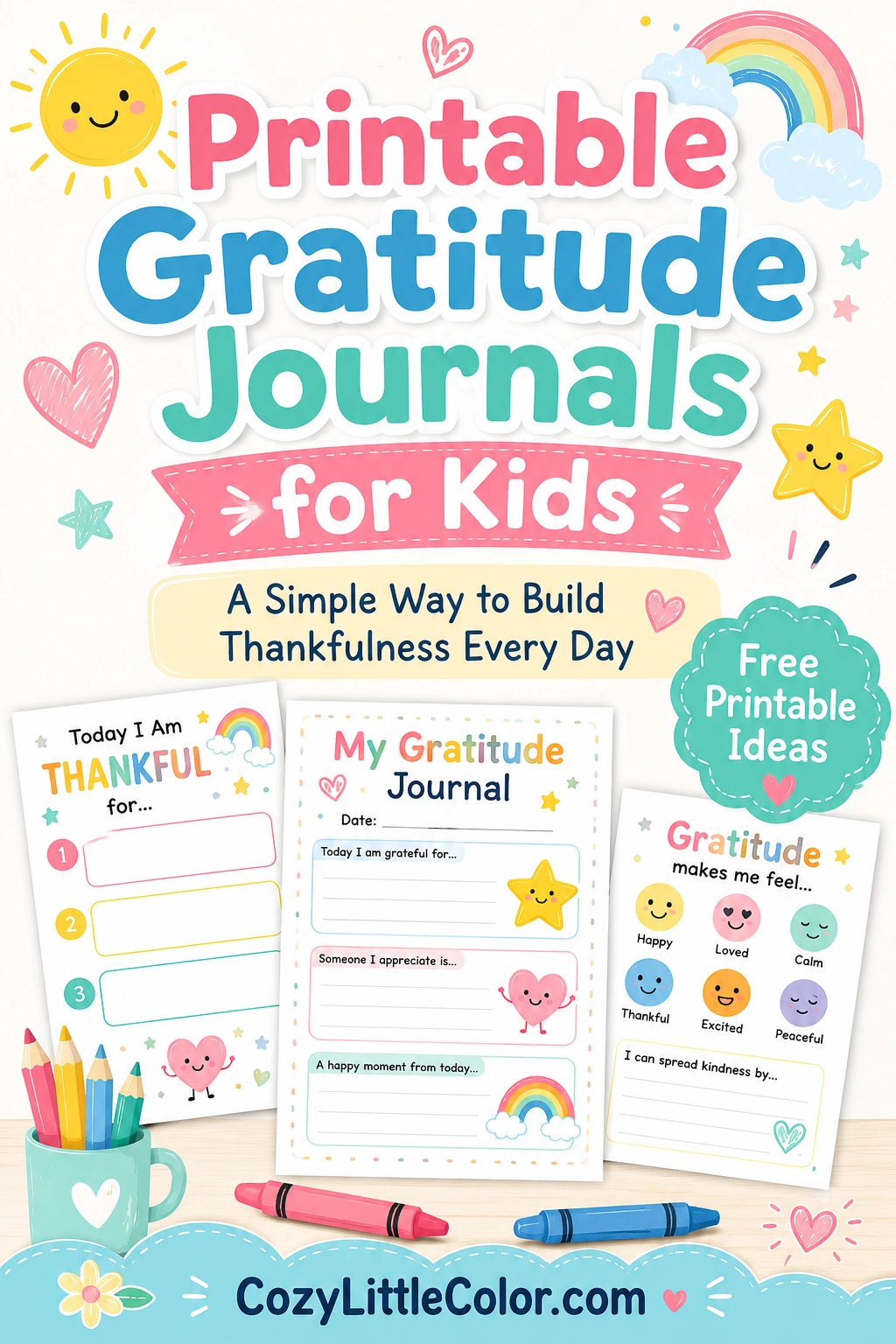
Have you ever wished there were a simple way to help your child notice the good things in their day, even when life feels busy, frustrating or overwhelming?
Printable gratitude journals for kids can turn that idea into an easy daily habit without adding another complicated activity to your routine. With just a few minutes of writing, drawing or talking together, children can begin paying closer attention to happy moments, kind people, favorite experiences and small everyday comforts they might otherwise overlook. Gratitude journaling can work especially well for younger children when prompts are short, colorful and inviting rather than feeling like homework.
Whether you use a journal during breakfast, after school or before bedtime, it can become a peaceful part of the day that encourages reflection and conversation. Best of all, printable gratitude pages make it easy to start immediately and adjust the activity to suit your child’s age, personality and writing ability.
This simple journal is designed to help children notice the little things that make them happy, reflect on their day and express what they are thankful for through writing and drawing. Enter your details below to receive this free printable.
Disclosure: This post contains affiliate links, which means I may earn a small commission if you make a purchase through them—at no extra cost to you. I only recommend products I truly believe in and think could support your well-being. Thanks for supporting the blog!
What Is a Printable Gratitude Journal for Kids?
A printable gratitude journal for kids is a collection of pages designed to encourage children to think about and record things they appreciate.
Unlike a traditional blank notebook, printable journals often contain simple prompts that make it easier for children to know what to write or draw.
Prompts might include:
- Something that made me smile today
- Someone who helped me
- My favorite part of today
- Something I am proud of
- Something beautiful I noticed
- One thing I am looking forward to
- Someone I want to thank
- Three things I am grateful for
For younger children, printable gratitude journals can include drawing boxes, simple sentences to complete and checkboxes.
Older children may enjoy more detailed writing prompts that encourage them to think about friendships, family, school, hobbies and personal achievements.
Why Gratitude Journaling Can Be Helpful for Kids
Gratitude journaling gives children an opportunity to slow down and think about positive experiences.
That doesn’t mean children should ignore difficult feelings or pretend everything is perfect. Instead, gratitude activities can help them notice that good moments can exist alongside disappointing or challenging ones.
For example, a child might have had a difficult day at school but still be grateful for playing with their dog, eating their favorite dinner or getting a hug from a parent.
This type of reflection can also encourage meaningful conversations between children and adults.
When a child writes, “I am grateful that Grandma called me,” it may naturally lead to a conversation about family relationships.
When they write, “I loved playing soccer today,” you may discover something they want to do more often.
Over time, a gratitude journal can also become a lovely record of childhood memories.
What Age Can Kids Start a Gratitude Journal?
Children do not need to be confident writers before they can begin practicing gratitude.
Preschoolers can participate by drawing pictures or telling an adult what they would like written on the page.
Children around kindergarten and early elementary age may enjoy sentence starters such as:
“Today I liked…”
“I am happy because…”
“Someone kind to me was…”
“My favorite thing today was…”
Older elementary children can usually complete more detailed gratitude prompts independently.
Tweens may prefer a journal that feels less childish and includes open-ended questions, mood reflections and personal goals.
The key is keeping the activity appropriate for your child’s developmental level.
How to Start a Gratitude Journal With Kids
Starting a gratitude journal doesn’t require an elaborate routine.
Choose a printable journal or several individual gratitude pages and place them somewhere your child can easily access them.
You might keep the pages:
- On a clipboard beside their bed
- In a homework station
- In a folder near the dining table
- Inside a binder
- In a basket with coloring supplies
- Beside your family’s bedtime books
If you plan to use printable pages regularly, a simple three-ring binder can keep everything together.
A set of colored pencils, washable markers or crayons can also make gratitude journaling more enjoyable, especially for younger children who prefer drawing.
If you want the pages to last longer, consider placing favorite reusable prompts inside dry-erase pockets and letting children answer them with dry-erase markers.
When Is the Best Time for Kids to Journal?
There isn’t one perfect time.
The best gratitude journal routine is usually the one that fits naturally into your family’s existing schedule.
Before Bed
Bedtime can be an ideal opportunity to reflect on the day.
Ask your child to think about one or two things they enjoyed or appreciated.
This can create a peaceful transition before sleep.
After School
After-school journaling gives children an opportunity to process what happened during the day.
Try prompts such as:
“What made you smile at school?”
“Who was kind to you today?”
“What was something interesting you learned?”
During Breakfast
Some families prefer starting the day with gratitude.
Children might write about something they are looking forward to or something they appreciate in their life.
At the Dinner Table
You can also combine gratitude journaling with family conversation.
Everyone can share one thing they appreciated that day before children write their responses in their journals.
Easy Gratitude Journal Prompts for Kids
Children sometimes need a little inspiration before they begin writing.
Here are some simple prompts you can include in your printable gratitude journal.
Everyday Gratitude Prompts
What made you smile today?
What was the best part of your day?
What is something you enjoyed eating today?
What is something you enjoyed doing?
What is something comfortable or cozy you are grateful for?
Family Gratitude Prompts
Who in your family helped you today?
What do you love doing with your family?
What is something someone in your family does that makes you happy?
Who would you like to say thank you to?
Friendship Gratitude Prompts
Who made you laugh today?
What do you appreciate about your best friend?
Did someone include you in an activity today?
How did you help a friend?
Nature Gratitude Prompts
What did you notice outside today?
What is your favorite season?
What animal are you grateful exists?
What is your favorite thing about being outdoors?
School Gratitude Prompts
What was something interesting you learned?
Which teacher or classmate helped you today?
What is something at school you enjoy?
What did you accomplish today?
Make Gratitude Journaling Fun Instead of Feeling Like Homework
Children are much more likely to enjoy gratitude journaling when it feels flexible.
Avoid worrying about spelling, grammar or perfect handwriting unless the activity is specifically being used for writing practice.
The purpose is reflection.
Let younger children draw instead of write.
Allow children to decorate their pages with stickers.
Use colorful pencils or markers.
Add seasonal gratitude prompts.
Keep journaling sessions short.
Some days your child might write three sentences.
Other days they may simply write:
“My dog.”
That still counts.
Create a Gratitude Journal Binder
A gratitude binder can turn individual printable pages into a keepsake children can use throughout the year.
You could include dividers for:
- Daily gratitude
- Family
- Friends
- School
- Holidays
- Seasons
- Favorite memories
- Kindness
- Goals
- Things I am proud of
A durable three-ring binder is useful if you plan to add pages throughout the year.
You can also use sheet protectors for special pages children want to preserve.
For families who print lots of children’s activities, a home printer, paper trimmer and basic laminator can make creating reusable activity packs easier.
Seasonal Gratitude Journal Ideas
Changing your prompts with the seasons can help keep gratitude journaling interesting.
Fall Gratitude
Children can write about:
- Crunchy leaves
- Favorite fall foods
- Cozy clothes
- Pumpkin activities
- Family traditions
- Beautiful autumn colors
Thanksgiving Gratitude
Thanksgiving is an especially natural time to introduce gratitude activities.
Prompts might include:
- Three people I am thankful for
- My favorite family tradition
- Something I appreciate about my home
- A favorite memory from this year
- Someone I would like to thank
Christmas Gratitude
Christmas gratitude journals can encourage children to think beyond gifts.
Try prompts such as:
- Something kind someone did for me
- Something I enjoyed giving
- My favorite family tradition
- Something special we did together
Spring Gratitude
Spring prompts might include:
- Flowers I noticed
- Animals I saw
- Something new I learned
- Something I enjoyed doing outside
Summer Gratitude
Summer journals can become mini vacation memory books.
Children could record:
- Favorite summer activities
- Trips
- Picnics
- Swimming days
- Friends they spent time with
- Favorite summer foods
Gratitude Journaling and Kindness Activities
Gratitude and kindness pair naturally together.
After children identify something they appreciate, encourage them to think about how they can show appreciation.
For example:
- If they are grateful for Grandma, they could draw her a picture.
- If they appreciate their teacher, they could write a thank-you note.
- If they are grateful for a friend, they could invite that friend to play.
- If they appreciate their home, they could help tidy their room.
- You could even add a weekly “kindness challenge” page to your gratitude journal.
Ideas might include:
- Help someone without being asked.
- Give someone a compliment.
- Write a thank-you note.
- Share something.
- Invite someone to join your game.
- Do one helpful job at home.
Create a Family Gratitude Challenge
A family gratitude challenge can be another fun way to use your printable journal.
Try choosing one gratitude prompt every evening for seven days.
Everyone answers the same question.
For example:
Day 1: What made you laugh today?
Day 2: Who helped you today?
Day 3: What food are you thankful for?
Day 4: What is something you love about our home?
Day 5: What is something you learned?
Day 6: What is something you enjoyed outside?
Day 7: What was your favorite moment of the week?
At the end of the challenge, children can look back over their answers.
You may be surprised by the small moments they remember most.
Supplies That Can Make Gratitude Journaling More Enjoyable
You don’t need anything complicated to start a printable gratitude journal.
A few simple supplies can make the experience more inviting.
Consider keeping a small journaling basket with:


You can place your printable gratitude journal pages inside the basket so everything is ready whenever your child wants to use them.
How Often Should Kids Use a Gratitude Journal?
Daily journaling works well for some children, but it isn’t necessary.
Three times a week may be more realistic for busy families.
Other children might enjoy completing one gratitude page every Sunday.
You can also use gratitude journals seasonally.
For example, children might complete a 30-day gratitude journal throughout November.
The goal is to build a positive routine without turning it into another obligation.
If your child begins resisting the activity, reduce the frequency or change the format.
Try drawing, stickers, family discussions or a simple one-sentence response instead.
Keep Completed Gratitude Journals
Don’t automatically throw away completed gratitude pages.
They can become surprisingly meaningful keepsakes.
Place completed journals in a memory box or keep them on a bookshelf.
A few years later, your child may enjoy reading entries such as:
“I am thankful for pancakes.”
“I am thankful Dad played Lego with me.”
“I am thankful my friend sat next to me at lunch.”
These ordinary childhood moments can become some of the most special memories.
Frequently Asked Questions
What should kids write in a gratitude journal?
Kids can write about people, experiences, places, foods, activities, pets, achievements or simple moments that made them happy. Younger children can draw pictures instead of writing complete sentences.
How many things should a child write each day?
One to three things is usually plenty. Keeping the activity short makes it easier to maintain consistently.
Can preschoolers use gratitude journals?
Yes. Preschool children can draw something they are thankful for or tell an adult their answer while the adult writes it down.
Should kids use a gratitude journal every day?
Not necessarily. Some families use them daily while others journal a few times a week or during specific seasons such as November.
What supplies do I need for a printable gratitude journal?
Basic printer paper and pencils are enough. You can also add crayons, markers, stickers, a binder, clipboard or reusable dry-erase pockets.
Can gratitude journals be used in classrooms?
Yes. Teachers can use simple gratitude prompts during morning work, writing centers, social-emotional learning activities or seasonal classroom activities.
How long should children spend gratitude journaling?
Five to ten minutes is usually plenty. Younger children may only need a few minutes to draw or complete one prompt.
What if my child doesn’t know what to write?
Offer a specific prompt such as “Who made you smile today?” or “What was your favorite thing you ate today?” Specific questions are often easier than simply asking what they are grateful for.
Final Thoughts and Call to Action
What could change if your child spent just a few minutes each week noticing the little things that make life feel happy, comfortable and special?
Printable gratitude journals for kids make it easy to create that habit without needing complicated supplies or a lengthy daily routine. Print a few pages, add pencils or crayons and encourage your child to begin with one simple thought. They might be grateful for a friend, their favorite stuffed animal, pancakes for breakfast or a sunny afternoon at the playground. Those small answers are exactly what make a childhood gratitude journal so meaningful. Start with whichever routine feels easiest for your family, whether that is bedtime journaling, a weekly gratitude page or a seasonal Thanksgiving challenge.
Save completed pages in a binder so your child can look back at them later. Over time, you’ll create more than a journal—you’ll have a collection of little memories showing what mattered most during each stage of childhood.
Other Blogs You May Be Interested In:
Blueberries Dot Marker Counting Activity


